
Top Waterproofing Products for Long-Lasting Protection
Explore the leading waterproofing solutions designed to keep your property dry and secure against water damage.
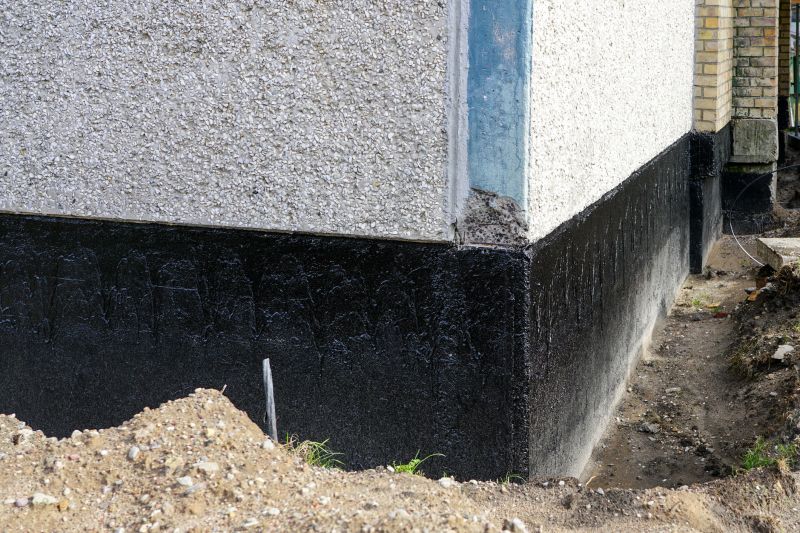 Waterproofing products are essential for protecting structures, foundations, and various surfaces from water intrusion and moisture damage. These products come in a wide array of formulations and applications, each suited to different needs and environments. For homeowners, contractors, or property managers in Freeport, IL, understanding the options available can help in selecting the most appropriate solutions for their specific projects.
Top Overall Option
Liquid Waterproofing Membrane
A versatile liquid membrane can be applied to various surfaces, creating a seamless, flexible barrier against water intrusion. It is suitable for both interior and exterior applications, providing a durable and adaptable solution for different waterproofing needs.
Types of Products For Waterproofings
Waterproofing Sealants
Sealants are used to fill gaps, cracks, and joints, preventing water from seeping through small openings. They are suitable for cracks in concrete, masonry, or around windows and doors.
Waterproof Paints and Coatings
These coatings are applied to surfaces like walls and roofs to create a water-resistant layer. They are easy to apply and available in various formulations for different substrates.
Waterproof Membranes
Membranes are sheet or liquid materials that form a continuous barrier over surfaces. They are commonly used on foundations, roofs, and decks for long-lasting waterproofing.
Crack Fillers
Designed to fill and seal cracks in concrete or masonry, preventing water infiltration at vulnerable points.
Hydrophobic Sprays
Spray-on treatments that penetrate surfaces to repel water, suitable for porous materials like brick or stone.
Roof Coatings
Specialized coatings formulated for roofs to prevent leaks and reflect sunlight, extending roof life.
Foundation Waterproofing Systems
Complete systems combining membranes, sealants, and primers to protect foundations from water damage.
Waterproofing Tapes
Flexible tapes used to seal joints, seams, or cracks in various surfaces for quick and effective waterproofing.
Cementitious Waterproof Coatings
These are cement-based products that can be applied to concrete or masonry surfaces for added waterproof protection.
Bituminous Coatings
Asphalt-based coatings suitable for roofing and below-grade applications, offering durable waterproofing.
Spray-Applied Waterproofing
High-performance spray systems that provide seamless waterproof barriers over large areas.
Waterproofing Admixtures
Additives mixed into concrete or mortar to enhance their water-resistant properties from within.
Waterproofing Fabrics and Meshes
Reinforcing materials used in conjunction with membranes to improve durability and crack resistance.
Waterproofing Caulks
Flexible caulks designed for sealing joints and seams in plumbing, siding, or masonry to prevent water ingress.
Popular Choices
A popular choice for creating seamless waterproof barriers on various surfaces, appreciated for its versatility.
Widely used for sealing cracks and joints, offering flexibility and adhesion for different materials.
Commonly applied on exterior walls and roofs for added water resistance and surface protection.
Preferred for foundation and roof applications, providing durable and long-lasting protection.
Essential for addressing small cracks, helping to prevent water infiltration at vulnerable points.
Popular for extending roof life and preventing leaks, especially in flat roofing systems.
Chosen for their ease of application and ability to repel water on porous surfaces like brick and stone.
Comprehensive systems that provide reliable foundation protection against water intrusion.
Convenient for sealing seams and joints quickly and effectively in various applications.
Popular for use on concrete structures, offering a durable and easy-to-apply waterproof layer.
Many waterproofing products are designed to be applied to basements, roofs, decks, or exterior walls, providing a barrier that prevents water from penetrating. These products often vary in their composition, including liquid coatings, sealants, membranes, and waterproof paints. When choosing a product, considerations such as the type of surface, exposure to weather, and longevity are important to ensure effective protection.
Proper application and compatibility with existing materials are crucial for optimal results. Some products are formulated for interior use, while others are intended for outdoor applications exposed to the elements. Maintenance and reapplication schedules also play a role in maintaining waterproof integrity over time. Consulting product specifications and manufacturer instructions can help achieve the best outcomes.
In addition to individual products, there are comprehensive waterproofing systems that combine multiple elements such as membranes, sealants, and primers to create a cohesive barrier. These systems are often preferred for large-scale or high-exposure projects, offering enhanced durability and performance. Whether sealing a basement wall or waterproofing a roof, selecting the right product involves understanding the specific needs of the project and the environment in which it will be used.
Key Buying Considerations
- Identify the specific surface or structure requiring waterproofing to select compatible products.
- Determine whether the application is interior or exterior, as formulations differ accordingly.
- Consider the exposure level to weather and water, choosing products rated for high moisture environments if needed.
- Evaluate the ease of application and drying times to fit your project schedule.
- Check compatibility with existing materials to prevent adverse reactions or poor adhesion.
- Assess the durability and longevity of the product to ensure long-term protection.
- Review manufacturer instructions for surface preparation, application methods, and maintenance.
- Select products that offer flexibility if the surface is prone to movement or cracking.
- Consider the environmental conditions, such as temperature ranges during application.
- Budget for reapplication or maintenance cycles to maintain waterproofing effectiveness.
- Look for products with good coverage rates to optimize cost and effort.
- Evaluate safety and ventilation requirements during application, especially for chemical-based products.
- Determine if supplemental systems like membranes or primers are needed for comprehensive waterproofing.
- Read customer reviews or seek expert advice for insights on product performance.
- Ensure the product complies with local building codes and standards.